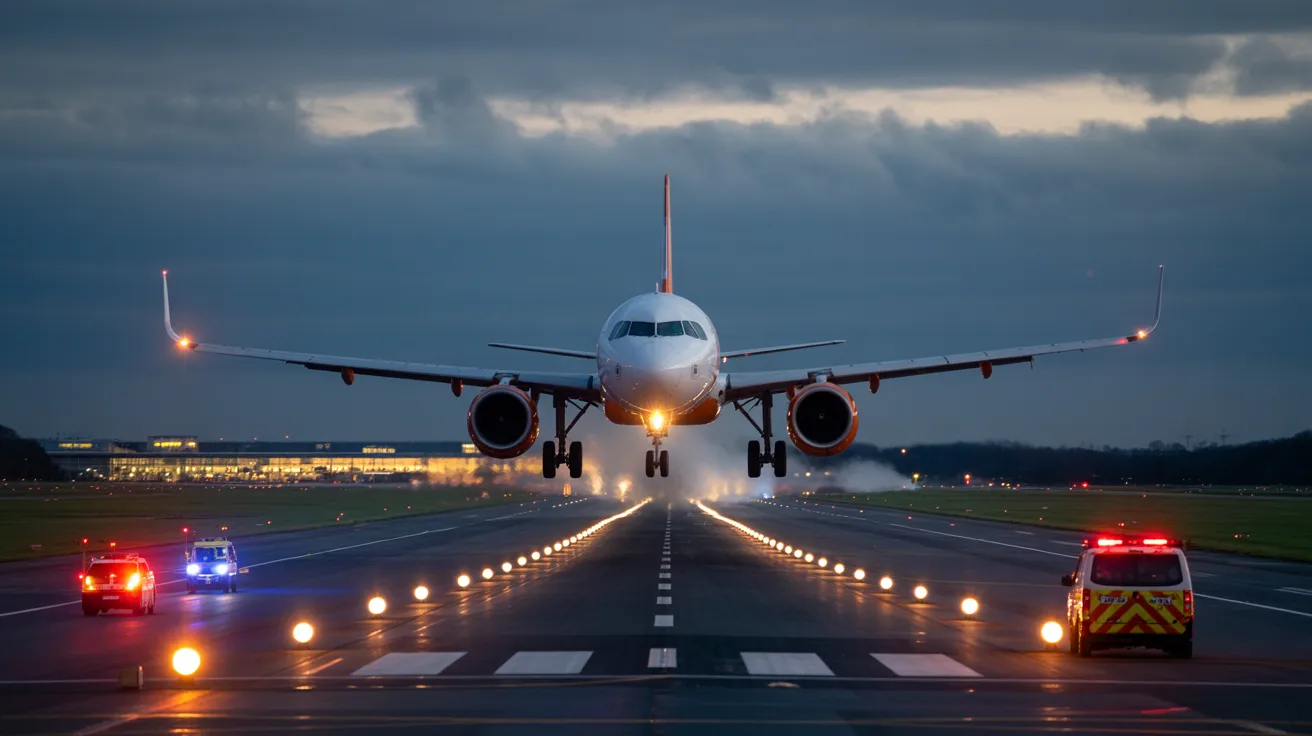
Air travel is widely considered one of the safest modes of transportation in the world. Yet occasionally, incidents occur that capture public attention—especially when a flight makes an unscheduled emergency landing. One such event involved EasyJet flight U2238, which was forced to divert and land unexpectedly at Newcastle International Airport.
The incident quickly became a trending topic online, with many travelers searching for “easyjet flight u2238 emergency landing newcastle” to understand what actually happened.
In reality, the event demonstrates the strength of aviation safety systems, the professionalism of airline crews, and the efficiency of emergency response teams.
This comprehensive guide explains:
- What happened on EasyJet flight U2238
- Why the aircraft diverted to Newcastle
- How emergency landings work in aviation
- What passengers experienced during the incident
- The safety protocols airlines follow
By the end of this article, you’ll have a clear, fact-based understanding of the incident and how the aviation industry manages unexpected situations safely.
Overview of EasyJet Flight U2238
Before diving into the emergency itself, let’s look at the flight details.
| Detail | Information |
|---|---|
| Airline | EasyJet |
| Flight Number | U2238 / U22238 |
| Aircraft Type | Airbus A320 |
| Departure Airport | Copenhagen Airport |
| Destination Airport | Manchester Airport |
| Diversion Airport | Newcastle International Airport |
| Date of Incident | October 27, 2025 |
The flight was operating a routine route between Copenhagen and Manchester, carrying passengers across the North Sea when an unexpected situation occurred mid-flight.
What Happened on EasyJet Flight U2238?
The incident began during cruise altitude when a passenger experienced a serious medical issue onboard.
Cabin crew quickly assessed the situation and informed the flight deck. As the passenger’s condition appeared serious enough to require immediate medical care on the ground, the captain decided to divert the aircraft to the nearest suitable airport.
Key moments during the flight included:
- Cabin crew identifying a passenger in medical distress
- Immediate first-aid procedures onboard
- Notification to the cockpit
- Declaration of an emergency
- Diversion to Newcastle
Pilots also transmitted the emergency code “7700”, which alerts air traffic control that an aircraft requires priority assistance.
This ensured that the flight received immediate clearance and priority landing instructions.
Timeline of the Incident
Here is a simplified timeline of events that occurred during the EasyJet flight U2238 emergency landing Newcastle incident.
| Time | Event |
|---|---|
| 10:22 PM | Flight departs Copenhagen (delayed departure) |
| Mid-flight | Passenger develops medical emergency |
| Shortly after | Cabin crew notify cockpit |
| 20:28 UTC | Pilot declares emergency (squawk 7700) |
| ~10:45 PM | Aircraft lands safely in Newcastle |
| After landing | Paramedics board aircraft |
| Later | Flight continues to Manchester |
The aircraft landed safely and emergency medical personnel immediately assisted the passenger.
Why the Plane Diverted to Newcastle
When a medical emergency occurs mid-flight, pilots must decide where to land as quickly and safely as possible.
The choice of Newcastle was based on several important factors.
1. Proximity
At the time of the emergency, the aircraft was approaching the east coast of the United Kingdom.
Newcastle was the closest airport capable of handling an Airbus A320 safely.
2. Runway Capability
Newcastle International Airport has a long runway and advanced navigation systems, making it suitable for emergency landings.
3. Emergency Services Availability
The airport has:
- Fire and rescue teams
- Medical services
- Ambulance access
- Air traffic control support
All these resources allow emergency situations to be handled efficiently.
Understanding the Emergency Code “7700”
In aviation, pilots communicate emergencies through transponder codes.
The most important one is:
Squawk 7700
This code signals a general emergency and alerts air traffic control immediately.
Common reasons include:
- Medical emergencies
- Mechanical issues
- Smoke or fire warnings
- Cabin pressure problems
- Security concerns
Once the code is transmitted, air traffic controllers prioritize the aircraft’s landing.
Passenger Experience During the Diversion
For passengers onboard, an emergency landing does not always feel dramatic.
In most cases, the experience is relatively calm.
Typical passenger experience includes:
- A cabin announcement explaining the diversion
- Cabin crew securing the cabin
- Earlier-than-expected descent
- Emergency vehicles visible on landing
In the case of flight U2238, reports suggest that passengers were kept informed by the crew, and the landing occurred safely without panic.
What Happens After an Emergency Landing?
Once the aircraft lands, several procedures occur.
Immediate Actions
- Paramedics board the aircraft
- The sick passenger receives treatment
- Airport safety teams inspect the plane
Operational Review
The airline then evaluates:
- Aircraft condition
- Crew duty hours
- Passenger arrangements
Flight Continuation
If everything is safe and crew limits allow, the flight may continue to its original destination.
This is exactly what happened with EasyJet U2238, which continued to Manchester after the emergency was resolved.
Aircraft Used for the Flight
The aircraft involved was an Airbus A320-200, one of the most widely used passenger aircraft in the world.
Key Features
- Seats around 150–180 passengers
- Advanced safety systems
- Modern cockpit automation
- Multiple redundant systems
Airbus aircraft are designed to handle unexpected situations safely, including emergency landings.
Aviation Safety Systems That Prevent Disasters
Events like the easyjet flight u2238 emergency landing newcastle highlight how aviation safety systems work together.
Key Safety Layers
1. Pilot Training
Airline pilots undergo:
- simulator emergency training
- recurrent testing
- strict certification requirements
2. Cabin Crew Medical Training
Flight attendants receive training in:
- CPR
- defibrillator use
- emergency medical procedures
3. Aircraft Medical Equipment
Commercial aircraft carry:
- oxygen bottles
- first aid kits
- automated external defibrillators
4. Air Traffic Control Support
Air traffic controllers coordinate:
- priority landing routes
- emergency services
- safe runway access
Impact on Other Flights
During emergency situations, nearby aircraft may need to adjust their flight paths.
In this case, one flight had to enter a holding pattern while the EasyJet aircraft landed safely.
This is normal aviation practice and ensures safe spacing between aircraft.
Passenger Rights and Compensation
Passengers often wonder whether they are entitled to compensation after a diversion.
Under EU261 / UK261 regulations, compensation depends on the cause.
Compensation May Apply If:
- Technical fault caused the delay
- Airline operational issue
Compensation Usually Does NOT Apply If:
- Medical emergencies
- Severe weather
- Air traffic restrictions
Medical emergencies are typically classified as extraordinary circumstances.
However, passengers may still receive:
- meals
- refreshments
- rebooking assistance
Lessons from the EasyJet Flight U2238 Incident
The diversion shows how aviation safety works in real life.
Key lessons include:
- Passenger health emergencies can occur on any flight
- Diversions are precautionary and routine
- Emergency protocols work effectively
- Passenger safety always comes first
Related Aviation Incidents
While rare, aviation history includes several emergency diversions handled successfully.
One well-known example is EasyJet Flight 6074 incident, where pilots safely landed after major electrical failures.
Such incidents show how pilot training and aircraft design protect passengers.
FAQs
What caused the EasyJet flight U2238 emergency landing?
The aircraft diverted due to a passenger medical emergency onboard, requiring urgent medical care.
Was anyone injured during the landing?
No injuries were reported from the landing itself. The diversion was precautionary to ensure medical treatment.
Did the flight continue to Manchester?
Yes. After the passenger received medical attention and the aircraft was refueled, the flight continued to Manchester later that night.
Are emergency landings dangerous?
Not usually. Most emergency landings are precautionary diversions, meaning the aircraft itself is safe.
Do airlines train for emergencies like this?
Yes. Pilots and cabin crew undergo regular training simulations to prepare for medical emergencies, technical faults, and other unexpected situations.
How common are medical emergencies on flights?
Medical events occur on roughly 1 out of every 600 flights worldwide, but serious incidents requiring diversions are much rarer.
Conclusion
The EasyJet flight U2238 emergency landing in Newcastle demonstrates how aviation safety systems work exactly as intended.
A passenger fell ill mid-flight, the crew acted quickly, and the aircraft diverted to the nearest suitable airport. Emergency responders were ready on arrival, the passenger received medical attention, and the flight continued safely afterward.
Rather than being a sign of danger, the event shows the strength of modern aviation procedures.
From trained pilots and well-equipped aircraft to coordinated air traffic control systems, every layer of the industry is designed to ensure passenger safety—even when unexpected situations arise.
Next time you hear about an emergency landing, remember:
It usually means the system is working exactly as it should.