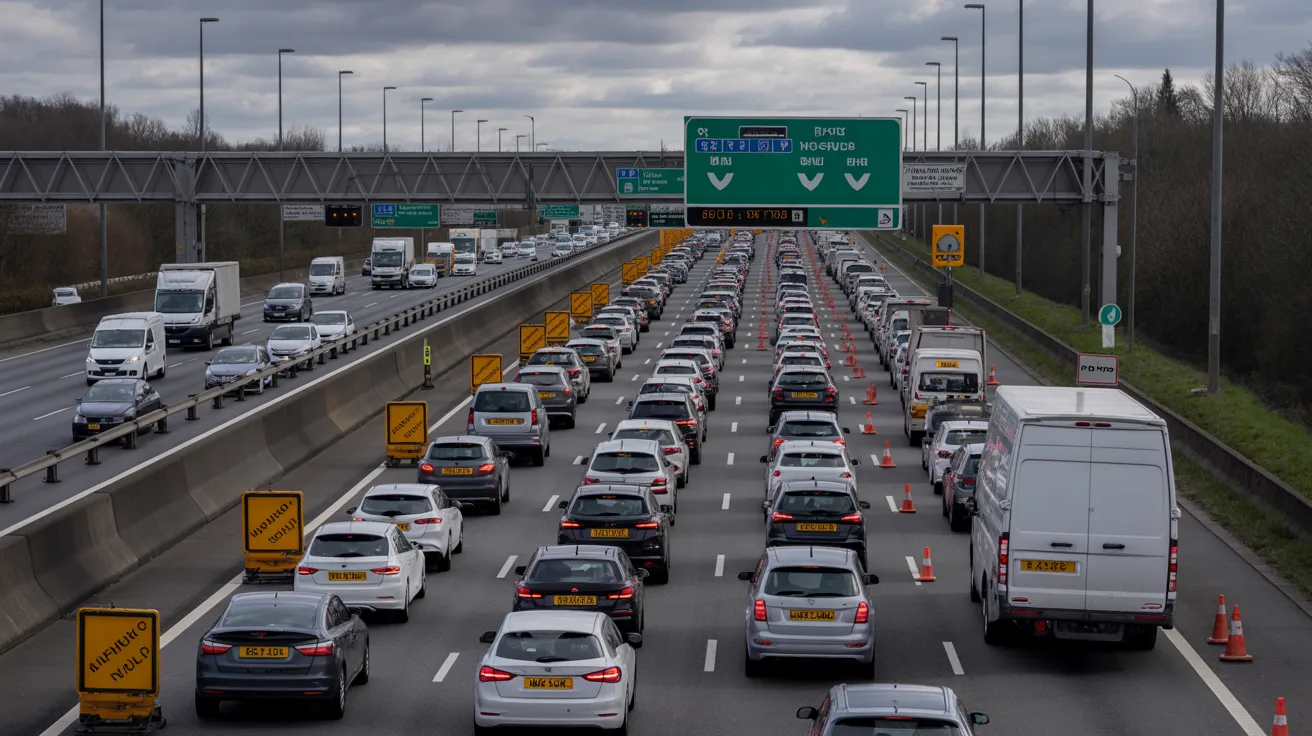
The M6 Walsall Birmingham lanes closure has become a major talking point among drivers commuting through the West Midlands. As one of the busiest motorways in the United Kingdom, the M6 motorway plays a vital role in connecting major cities like Birmingham and Walsall.
When lanes close—whether due to accidents, roadworks, or emergency repairs—the impact spreads quickly across the region. Traffic congestion, long delays, and diversion routes often affect thousands of commuters every day.
Recently, reports of lane closures between Walsall and Birmingham have caused significant disruption to traffic flow, forcing drivers to rethink their travel plans. Understanding why these closures occur and how to navigate them can help motorists reduce delays and travel more efficiently.
This comprehensive guide explores:
- The latest updates on the M6 Walsall Birmingham lanes closure
- Reasons behind the closures
- Traffic impacts and delays
- Diversion routes and travel tips
- Future motorway improvements
By the end of this article, you’ll have a clear understanding of how these closures affect your journey and how to plan around them.
Latest News About M6 Walsall Birmingham Lanes Closure
Recent reports highlight major disruptions on the M6 motorway between Walsall and Birmingham. For example, a multi-vehicle crash caused lane closures and heavy delays, creating traffic congestion across the West Midlands region.
Other incidents have included:
- Collisions involving lorries and motorcycles
- Broken-down vehicles blocking lanes
- Emergency repair work
- Oil spills and debris on the carriageway
In one serious incident, three of four lanes were closed after a crash involving lorries, resulting in miles of traffic queues and hour-long delays for drivers.
These disruptions illustrate how even a single incident can affect thousands of motorists traveling between Walsall and Birmingham.
Overview of the M6 Motorway
The M6 motorway is the longest motorway in the UK and one of the country’s most critical transportation corridors.
Key Facts About the M6
| Feature | Details |
|---|---|
| Total Length | ~230 miles |
| Regions Covered | West Midlands, North West England, Staffordshire |
| Major Cities Connected | Birmingham, Manchester, Coventry |
| Traffic Volume | One of the busiest UK motorways |
Because it passes through major urban areas, the section between Walsall and Birmingham is especially prone to congestion.
Certain junctions—such as J7 Great Barr—are known traffic hotspots where slip roads and merging traffic frequently slow down motorway flow.
Where the M6 Walsall Birmingham Lane Closures Occur
Most closures happen between these junctions:
| Junction | Location |
|---|---|
| J6 | Gravelly Hill Interchange (Spaghetti Junction) |
| J7 | Great Barr |
| J9 | Wednesbury |
| J10 | Walsall |
| J10A | Wolverhampton |
This stretch carries a high volume of commuter and freight traffic, making it particularly sensitive to disruptions.
Common Causes of Lane Closures on the M6
Understanding why lanes close can help drivers anticipate delays.
1. Traffic Accidents
The most frequent cause of lane closures is road traffic collisions.
Examples include:
- Multi-vehicle accidents
- Lorry collisions
- Motorbike crashes
Emergency services typically close one or more lanes to allow:
- Ambulances to reach injured drivers
- Police to investigate the accident
- Recovery vehicles to remove damaged cars
Even minor collisions can cause long delays because traffic slows significantly when lanes merge.
2. Broken-Down Vehicles
A single stranded vehicle can block an entire lane.
When this happens:
- Highways officers may temporarily close lanes
- Traffic speed limits may be reduced
- Recovery vehicles are dispatched
This type of closure often causes sudden congestion during rush hour.
3. Planned Roadworks
Road maintenance is essential to keep motorways safe.
Examples include:
- Resurfacing the road surface
- Bridge repairs
- Installation of smart motorway technology
- CCTV upgrades
Highways authorities frequently carry out work overnight between 9 PM and 6 AM to minimize disruption.
4. Infrastructure Upgrades
Major projects occasionally require long-term lane closures.
For instance, improvement works around M6 Junction 10 were carried out to reduce congestion and increase road capacity.
These upgrades help improve traffic flow in the long run but can temporarily create delays.
Impact of M6 Lane Closures on Traffic
Lane closures between Walsall and Birmingham can cause widespread traffic disruption.
Common Traffic Problems
Drivers may experience:
- Long queues during rush hour
- Delays of 30–60 minutes
- Increased congestion on nearby roads
- Slower travel speeds
Because the motorway serves thousands of commuters, closures often cause spill-over traffic onto local roads.
Alternative Routes During M6 Lane Closures
When the M6 experiences disruptions, drivers can consider several alternative routes.
Recommended Diversions
| Route | Direction |
|---|---|
| A34 | Birmingham to Walsall |
| A41 | West Bromwich route |
| Black Country Route (A463) | Wolverhampton diversion |
| M5 motorway | Alternative north-south route |
However, these routes can also become congested when drivers attempt to avoid the motorway.
Travel Tips for Drivers
If you’re traveling through the affected area, consider these tips.
Before Your Journey
- Check live traffic updates
- Use navigation apps like Google Maps or Waze
- Allow extra travel time
During the Journey
- Follow motorway signage
- Reduce speed near lane closures
- Stay in your lane until directed to merge
After the Incident
Traffic may remain slow for several miles even after lanes reopen.
Smart Motorways and Traffic Management
The UK has introduced smart motorway technology to improve traffic flow.
Features include:
- Variable speed limits
- Electronic lane control signs
- CCTV traffic monitoring
Some sections of the M6 use these systems to dynamically manage traffic conditions.
Future Improvements to the M6
Several infrastructure projects aim to reduce congestion in the West Midlands.
Planned Improvements
- Bridge maintenance and repairs
- Smart motorway upgrades
- Junction redesign projects
Authorities also conduct emergency gantry construction and maintenance work, which can temporarily close one or two lanes overnight.
How to Check Live M6 Traffic Updates
Drivers can monitor motorway conditions using official sources.
Useful Traffic Websites
- UK Government traffic updates: https://www.gov.uk/traffic-information
- RAC Traffic News: https://www.rac.co.uk/route-planner/traffic-news/m6/
- Motorway Cameras: https://www.motorwaycameras.co.uk
These platforms provide:
- Live traffic maps
- Accident alerts
- Planned roadworks
Frequently Asked Questions (FAQ)
Why are lanes closed on the M6 between Walsall and Birmingham?
Lane closures typically occur due to traffic accidents, roadworks, or broken-down vehicles. Emergency services may temporarily close lanes while clearing the incident.
Which junctions are affected by the M6 closure?
Most incidents occur between:
- Junction 6 (Birmingham)
- Junction 7 (Great Barr)
- Junction 9 (Wednesbury)
- Junction 10 (Walsall)
How long do M6 lane closures usually last?
Minor incidents may clear within 30–60 minutes, while major crashes or roadworks can cause delays for several hours.
How can I avoid traffic delays on the M6?
You can avoid delays by:
- Checking live traffic updates
- Traveling outside peak hours
- Using alternative routes like the A34 or M5.
Is the M6 the busiest motorway in the UK?
Yes. The M6 is considered one of the busiest motorways in the UK due to its length and the number of major cities it connects.
Conclusion
The M6 Walsall Birmingham lanes closure highlights how critical motorway infrastructure is to everyday travel in the West Midlands. Whether caused by accidents, roadworks, or emergency repairs, these closures can lead to serious delays for commuters and freight traffic.
By staying informed about traffic updates, alternative routes, and motorway improvement projects, drivers can better plan their journeys and reduce the risk of getting stuck in long queues.
As the UK continues to upgrade its motorway network with smarter traffic management systems, the goal is to minimize disruptions and create safer, more efficient roads for everyone.