Introduction
Walk onto any modern construction site today, and you’ll notice something fascinating. The steel and concrete tell one story—but the real magic happens inside digital models.
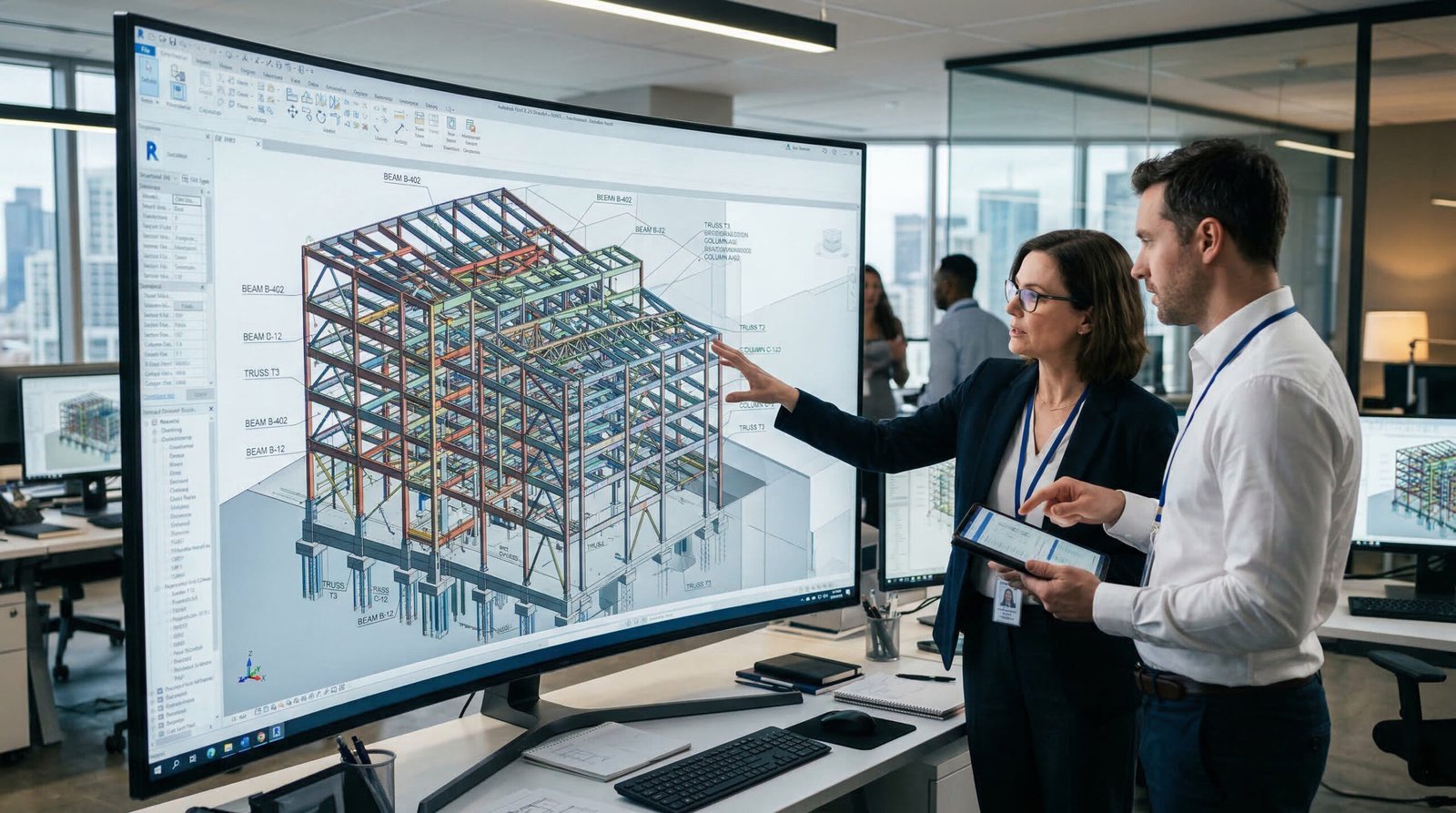
Enter the bim coordinator elsesser structural engineer. Over the last decade, engineering teams have shifted from flat 2D drawings to fully integrated 3D models that carry structural data, schedules, materials, and more. Managing this complexity requires a professional who blends structural engineering knowledge with digital coordination skills.
Interestingly, many firms now see this role as critical. Without it, projects often encounter costly clashes that could have been solved long before construction began. Let’s take a closer look.
What is BIM Coordinator Elsesser Structural Engineer
A bim coordinator elsesser structural engineer manages Building Information Modeling (BIM) workflows for structural engineering projects. This role is especially prominent in consultancies like Elsesser Engineering.
Core Definition
| Aspect | Details |
|---|---|
| Role | Coordinate structural BIM models across multiple disciplines |
| Focus | Structural engineering + digital modeling |
| Responsibility | Clash detection, model management, collaboration |
| Industry | Construction, architecture, structural engineering |
This professional ensures architectural, MEP, and structural models fit together seamlessly.
Responsibilities
- Managing structural BIM models
- Coordinating with architects and MEP engineers
- Running clash detection and reporting issues
- Maintaining modeling standards
- Supporting structural design teams
According to a detailed BIM workflow article on Engineering.com, early digital coordination reduces errors and costly rework by identifying clashes before they happen.
Origin and Meaning
The BIM coordinator role is relatively new. Before BIM, design teams relied on printed CAD drawings. Coordination meant emails, printouts, and frequent revisions.
With the rise of 3D modeling and integrated digital workflows, dedicated coordinators became essential. Many BIM coordinators started as structural engineers before specializing in digital model management.
Evolution of BIM Roles
| Era | Technology | Coordination Method |
|---|---|---|
| 1990s | CAD | Manual coordination |
| Early 2000s | 3D modeling | Limited digital coordination |
| 2010s | BIM | Dedicated coordinators emerge |
| Today | Integrated BIM ecosystems | Specialized BIM engineers |
Why BIM Coordinator Elsesser Structural Engineer is Trending
Three major shifts drive this trend:
- BIM Mandates – Governments and large private projects now require BIM workflows.
- Project Complexity – Modern buildings integrate structural, MEP, and architectural systems that must align digitally.
- Cost of Errors – Construction mistakes are expensive. Early BIM coordination can prevent millions in rework.
A detailed analysis on Autodesk Univcdersity’s blog highlights how early clash detection improves project efficiency significantly.
Key Features
Core Skills
- Structural engineering knowledge
- BIM modeling expertise
- Coordination workflows
- Communication across disciplines
- Model data management
Tools Used
| Tool | Purpose |
|---|---|
| Revit | 3D structural modeling |
| Navisworks | Clash detection |
| BIM 360 | Cloud collaboration |
| Dynamo | Automation scripts |
| Tekla | Advanced structural modeling |
Note: Technical skills alone aren’t enough. Effective coordinators also need problem-solving and communication abilities.
Benefits and Uses
Advantages
- Reduced construction errors
- Faster design coordination
- Clearer communication
- Accurate cost estimation
- Better visualization of structures
Impact Table
| Phase | BIM Coordinator Contribution |
|---|---|
| Design | Coordinate structural models |
| Pre-construction | Clash detection |
| Construction | Model updates |
| Post-construction | Facility management support |
Digital models maintained by BIM coordinators can assist in long-term building maintenance as well.
Real Examples
Example 1: High-Rise Tower
A 40-story office building has steel framing and complex HVAC. Without BIM coordination, ducts might collide with beams. A bim coordinator elsesser structural engineer detects these conflicts early.
Example 2: Hospital Construction
Hospitals integrate medical gases, electrical systems, and structural reinforcements. BIM coordination ensures these complex systems don’t interfere.
Example 3: Large Bridge Projects
Multiple engineering firms can collaborate seamlessly on bridge designs, reducing misalignment and structural errors.
For deeper understanding, check a construction technology article on Engineering.com that details these real-world applications.
Common Misconceptions
- Myth 1: BIM coordinators only use software → Reality: They also understand structural principles.
- Myth 2: Architects handle all coordination → Reality: Coordinators handle technical clashes.
- Myth 3: It’s a junior role → Reality: Often mid-to-senior level technical specialists.
- Myth 4: BIM is just 3D modeling → Reality: Includes cost, schedule, and lifecycle data.
Expert Insights
Industry professionals describe BIM coordinators as the bridge between design and construction reality.
Key points:
- Coordination reduces risk
- Early modeling improves accuracy
- Integrated workflows boost efficiency
For tools, see Related guide on BIM software tools
For career guidance: Learn how professionals become BIM coordinators
Future Trends
- AI-assisted clash detection
- Digital twins for real-time monitoring
- Cloud-based collaboration
- VR/AR for visualization
- Automated model checking
| Technology | Impact |
|---|---|
| AI | Detects clashes automatically |
| Digital twins | Real-time building monitoring |
| Cloud BIM | Team collaboration |
| VR/AR | Design visualization |
Despite new tools, the core role remains coordinating complex systems digitally.
FAQ Section
What does BIM coordinator elsesser structural engineer mean?
A professional managing digital structural models and coordinating across disciplines to prevent clashes and errors.
What skills are required?
Structural engineering knowledge, BIM software expertise, communication, and project coordination skills.
Is BIM coordination a good career?
Yes. Increasingly complex projects create high demand for skilled BIM coordinators.
How does BIM coordination help structural engineering?
It detects clashes early, reduces rework, improves accuracy, and ensures design integrity.
Which industries hire BIM coordinators?
Construction, structural engineering consultancies, architecture studios, and government infrastructure projects.
What software do BIM coordinators use?
Revit, Navisworks, Tekla, BIM 360, Dynamo.
Can structural engineers transition into BIM coordination?
Yes. Many start as structural engineers and later specialize in BIM workflows.
Is BIM coordination only for large projects?
No. Small and medium projects increasingly adopt BIM coordination as well.
Conclusion
The bim coordinator elsesser structural engineer is a vital bridge between design and reality. Combining engineering expertise with digital coordination, this role ensures complex systems integrate seamlessly.
As BIM adoption grows, demand for these professionals will continue to rise. If you want to be part of the future of construction, exploring BIM coordination is a smart move.